

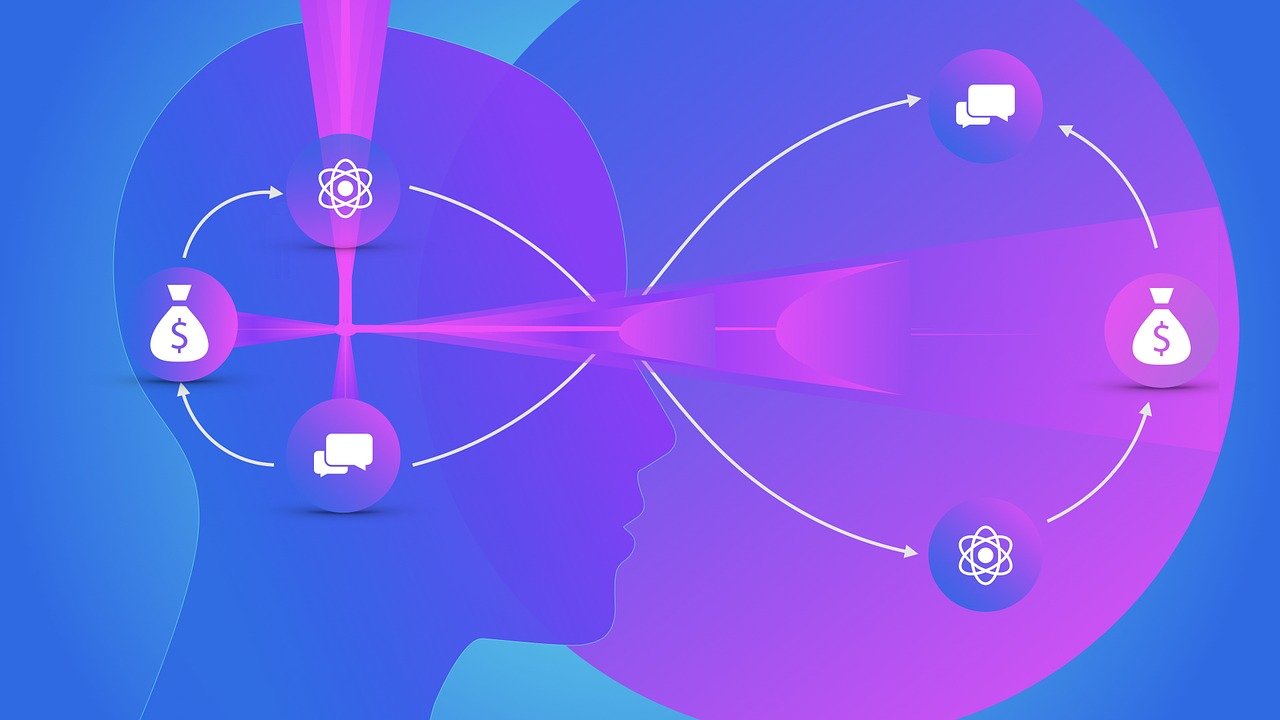
By now you have probably seen that Facebook has rebranded itself as Meta, and may have started to see the word “metaverse” circulate. You are probably also very confused as to what the metaverse is, and for good reason. The Metaverse is extremely difficult to define and explain because it doesn’t actually exist yet. It’s an idea, a goal for a world where the digital overlaps with the physical.
The metaverse would be made possible through key tools such as virtual reality (VR), Augmented Reality (AR), and blockchain.
VR is a technology that creates artificially rendered 3D virtual worlds. Using headsets such as Meta’s Oculus Rift and HTC Vive, people can interact with these worlds, and experience them much like they do the real world. In virtual reality you can attend a live concert, buy and sell goods, chat with other people, and much more.
AR is an interactive experience where cameras superimpose digital images upon the camera’s stream of the real world. It can also include other sensory stimuli such as auditory and olfactory, allowing you to perhaps hear the ocean and smell the sea salt.
Blockchain is the technology behind crypto currency and NFTs. Without getting too technical, it would be fundamental to the commerce and continuity aspects of the metaverse. This is because blockchain technology creates an immutable digital ledger of transactions. This is what will likely allow a person to transfer their digital assets (currency, clothing/avatar design, etc.) from one platform to another.
According to Mark Zuckerberg, the Metaverse is “a more immersive and embodied internet” and “a set of virtual spaces where you can create and explore with other people who aren’t in the same physical space as you.”
According to Matthew Ball, venture capitalist and author of The Metaverse Primer, the Metaverse is “an expansive network of persistent, real-time rendered 3D worlds and simulations that support continuity of identity, objects, history, payments, entitlements, and can be experienced synchronously by an effectively unlimited number of users.”
Currently the metaverse is only an idea. While we try to imagine what it may become in the future, the possibilities are near infinite. Only time will tell whether it will become as ubiquitous as the internet, or whether it will remain an impossible dream.